Short answer: You can save money on rent by negotiating before you sign, signing a longer lease, getting a roommate, moving in the off-season (October–April), skipping amenities you won’t use, choosing a lower floor or a private landlord, and trimming the bills bundled into your housing costs. Most renters can knock $50–$700 a month off their rent using one or more of these without moving somewhere worse.
That’s the version you can screenshot. Below is the version that actually saves you money, with the numbers, the scripts, and the timing that the listing sites quietly leave out.
First, know what you’re working with
Rent is almost never as fixed as it looks. A landlord with an empty unit isn’t earning anything; they’re losing money every week it sits there, plus the cost of advertising, screening applicants, and cleaning between tenants. That gap is your leverage. Every tactic below is really just a different way of giving a landlord a reason to take a little less from someone reliable rather than gamble on a stranger.
A useful rule of thumb: housing shouldn’t eat more than about 30% of your gross (pre-tax) income. In fact, half of U.S. renters are now cost-burdened: a record 22.6 million households spending more than that threshold on housing. If you’re one of them, even two of the moves below can pull you back under the line.
Here’s the quick math everyone skips:
| If you save… | …you keep this much per year |
|---|---|
| $50/month | $600 |
| $100/month | $1,200 |
| $200/month | $2,400 |
| $500/month | $6,000 |
A “small” $50 win you set up once and forget about beats a one-time coupon every single time.
Before you sign: the savings that are easiest to win

This is the cheapest moment to save money, because you have something the landlord wants- your signature- and you haven’t given it away yet.
1. Negotiate the rent (yes, really)
Most people assume the advertised price is the price. For private landlords and smaller buildings, it often isn’t. You lose nothing by asking, and the worst case is “no.”
Don’t just say “can you go lower.” Bring a reason. Pull up two or three comparable units nearby that rent for less, then send something like this:
“I’d love to take the unit. I’ve got steady income, a clean rental history, and I can sign today. I’m seeing a few similar places in the area around $[X]. Is there any flexibility to meet closer to that? I’d happily commit to a longer term.”
You’ve given them three gifts in one message: certainty, a comparison, and a longer lease. That’s a much easier “yes” than a flat ask.
2. Trade a longer lease for a lower rate
Landlords hate turnover because every empty month and every new-tenant search costs them real money. A tenant offering an 18-month or 2-year lease is offering stability, and stability is worth a discount. As a bonus, you also lock your rate in, so you’re protected if the market climbs.
3. Ask about move-in specials and waived fees
A free month, a waived application or admin fee, or free parking is still money in your pocket, and it’s often easier to win than a permanent rent cut, because it doesn’t change the number the landlord reports on paper. Always ask: “Are there any current specials or fees you can waive?”
4. Offer to pay a few months upfront
If you can swing it, offering several months of rent in advance is genuinely attractive to a landlord- the income is guaranteed, with zero risk you’ll fall behind. Some will trade a discount for that certainty. Only do this with a landlord and lease you trust, and get the discount in writing.
Change your living situation: the biggest savings on the list

5. Get a roommate (the single most effective move)
Splitting is almost always the largest dollar saving available. The trick is that a two-bedroom is rarely double the price of a one-bedroom.
Example: A 1-bed costs $2,000/month. A 2-bed costs $3,000/month. Split that 2-bed and you each pay $1,500 so you save $500 a month versus living alone, and you split utilities on top of that.
Two notes that save headaches later: check your lease actually permits roommates (some require them to apply and pass a credit check), and put the money split in writing between you so there’s no ambiguity if someone moves out.
6. Go a little smaller
You don’t have to share to save. Downsizing from a one-bedroom to a studio, or just to a smaller floor plan, can cut $300–$700/month depending on the market. Smart storage under-bed bins, wall shelves, a fold-down desk make a smaller space feel deliberate instead of cramped. If you’re renting while saving for a house, this is the move that gets you to a down payment fastest.
7. Sublet or rent out a spare room
If your lease allows it (get written permission first- this is non-negotiable), renting a spare bedroom or subletting while you travel can offset a big chunk of your rent. Check local short-term-rental rules and community regulations before listing anything.
Be strategic about when and where
8. Move in the off-season
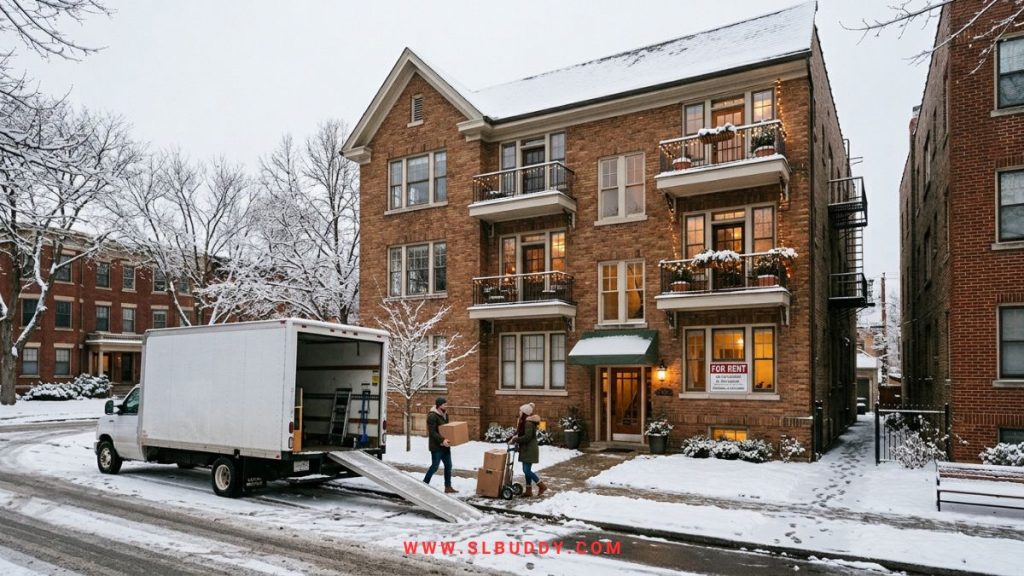
This is the timing trick that quietly does a lot of work. Demand for rentals drops in the colder months, so landlords are more willing to deal.
| Season | Demand | Your leverage |
|---|---|---|
| Summer (Jun–Aug) | Highest | Lowest — you’ll pay a premium |
| Spring & early fall | Moderate | Some |
| Winter (Oct–Apr) | Lowest | Highest — best time to negotiate |
If you live in a college town, the supply swings even harder. Search in late spring or early summer when students clear out and vacancies spike.
9. Pick the neighborhood deliberately
Moving even one neighborhood out from the “hot” area, or one stop further on transit, can save thousands a year. Factor in the trade: a cheaper place far from work can cost you the savings back in gas, car wear, and time. Sometimes paying slightly more to live close is the cheaper choice overall; run both numbers.
10. Choose the less-glamorous unit in the building
Not every unit in a building is priced the same. Ground-floor and basement apartments usually rent for less because they’re seen as less desirable; top-floor units carry a premium. Less sunlight, sure, but real savings for the same square footage. Same logic applies to a unit next to a noisy stairwell or elevator: ask for a reduction because of the downside.
11. Rent from a private landlord, not a big company
Individual owners and family landlords are often far more flexible on price, fees, and terms than corporate property managers running rigid pricing software. The trade-off is fewer amenities and slower maintenance, but if your goal is the lowest number, a private landlord is usually where you’ll find it.
Cut the costs bundled into “rent”

Your true housing cost isn’t just the rent line; it’s rent plus everything attached to it.
12. Skip amenities you won’t actually use
Pools, fancy gyms, and concierge desks are baked into your rent whether you use them or not. If you already have a gym membership or run outside, you’re paying twice. Choosing a building without the extras can save hundreds a month. Be honest about what you’ll genuinely use versus what just looked good in the listing photos.
13. Look for utilities included — or trim them yourself
Units with some utilities included can simplify and lower your total monthly outlay. Where you control the bills, the small stuff adds up: LED bulbs, fixing leaks, unplugging idle electronics, and blackout curtains to ease heating and cooling. Cut the cord on cable in favor of streaming, and shop your internet and phone plans- your landlord doesn’t control those, so the savings are entirely yours.
14. Right-size your renter’s insurance
Keep the coverage but review it. Many renters pay for riders on jewelry or electronics they no longer own, or carry limits far above what their stuff is actually worth. A quick call to your provider for a policy review, plus comparing one or two competing quotes, can shave the premium.
The creative options most articles skip

15. Trade work for a rent reduction
If you’ve got a useful skill- painting, basic repairs, snow shoveling, leaf raking, light grounds maintenance- some landlords will knock money off in exchange. Even a $50/month reduction is $600 a year. Two rules: get the arrangement in writing (the work, the hourly value, the hours per month), and treat it like the contract it is.
16. Ask about referral fees
Larger complexes with multiple vacancies often pay tenants a referral fee for bringing in a new renter, and that fee can be applied straight to your rent. A private landlord with one unit probably won’t, but it costs nothing to ask: “Do you offer a referral fee if I send someone who signs a lease?”
17. Consider rent-to-own or a housing-for-work setup
If buying is a long-term goal, a rent-to-own agreement can route part of your monthly payment toward a future purchase price- though these need careful reading and ideally professional advice before you sign. Separately, certain jobs (property management, caretaking, some resort and ranch roles) include housing as part of the package, effectively zeroing out your rent. The income trade-off varies, so weigh it honestly.
Common mistakes that quietly cost renters money
- Assuming the price is final. For private landlords especially, it frequently isn’t.
- Negotiating in summer. You have the least leverage exactly when everyone else is also looking.
- Chasing a cheap rent far from work. The commute can eat every dollar you saved.
- Skipping the lease fine print on roommates and subletting. Doing it without written permission can get you evicted- the opposite of saving money.
- Forgetting to get verbal deals in writing. A discount you can’t prove isn’t a discount.
Your 5-step action plan for this week
- Run the 30% check. Multiply your gross monthly income by 0.30. If your rent is above it, you have a real reason to act now.
- Pull 3 comparable listings near you to use as negotiation ammunition.
- Pick your top 2 tactics from this list- usually negotiate + roommate, or off-season move + smaller unit.
- Send one message to your landlord or a prospective one using the script above.
- Get any “yes” in writing before you celebrate.
If you set up even one recurring saving, say, a $100/month reduction, you’ll keep an extra $1,200 this year, every year, for work you did once.
Can you really negotiate rent, or is the listed price fixed?
You can often negotiate, especially with private landlords, smaller buildings, and during the off-season. The advertised price is a starting point more than a rule. Come with comparable listings and an offer of stability (longer lease, reliable history), and ask politely; the worst outcome is a “no” that costs you nothing.
What is the single best way to save money on rent?
For most people, getting a roommate. Because a larger unit usually isn’t proportionally more expensive, splitting it can save hundreds a month, plus shared utilities typically the biggest dollar win available.
When is the cheapest time of year to rent?
The off-season, roughly October through April, when demand is lowest, and landlords are most willing to negotiate. Summer is the most expensive. In college towns, late spring also brings a flood of vacancies.
How much can I realistically save on rent?
It depends on your market and how many tactics you stack, but savings commonly land anywhere from $50 to $700 a month. Even the low end adds up to $600 a year for a one-time effort.
Can I lower my rent without moving?
Yes. Negotiate at renewal, sign a longer lease, add a roommate, sublet a spare room (with permission), trim bundled utilities, right-size your renter’s insurance, or trade light work for a reduction, all without packing a single box.
This guide is for general information and isn’t financial or legal advice. Lease laws, subletting rules, and rent regulations vary by location, so check your local rules and your lease before acting.